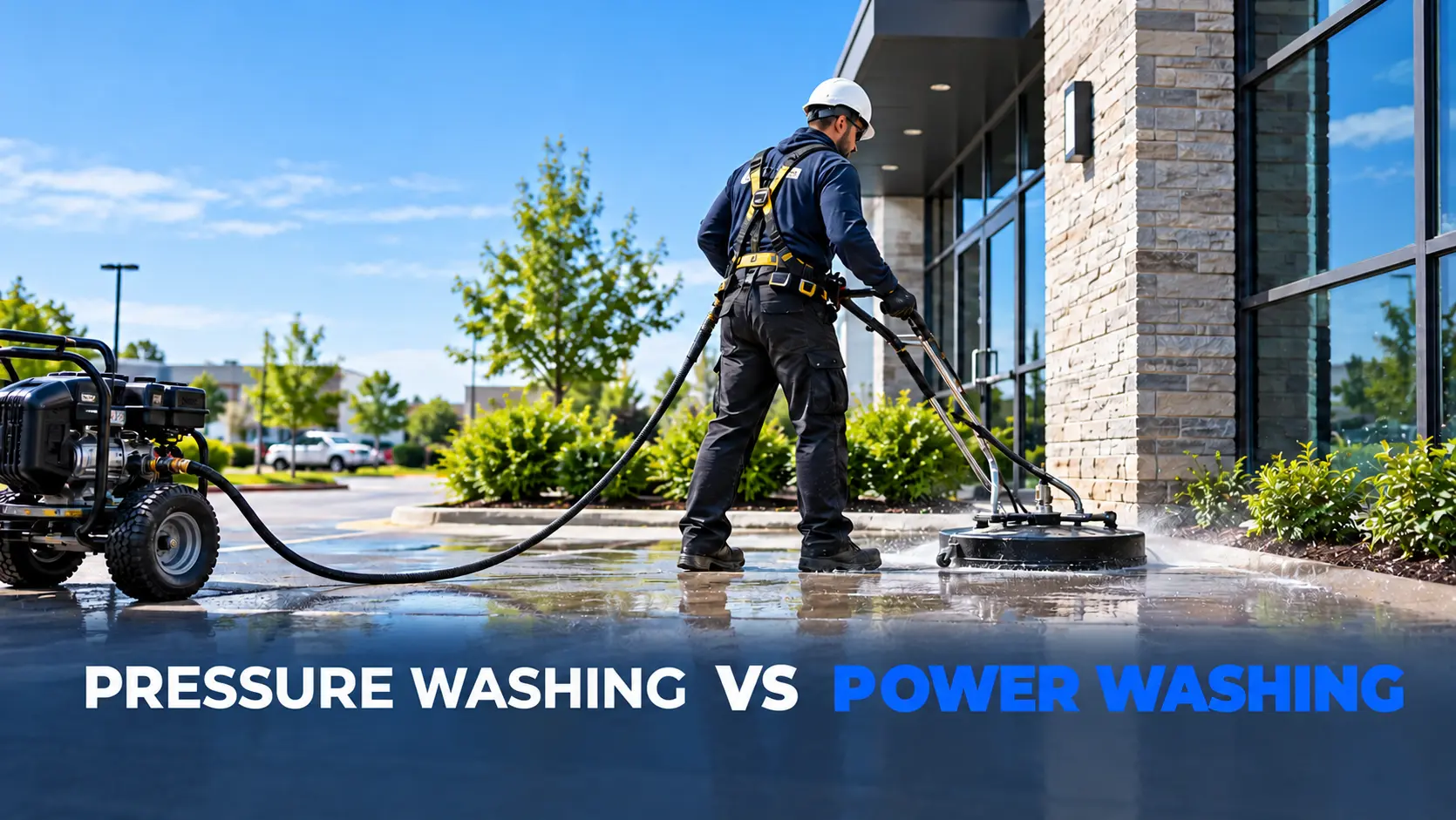
Pressure washing and power washing get used like they mean the same thing, but they are not the same service. One relies on cold water force. The other adds heat to break down oil, grease, and years of embedded grime. For property managers handling facades, parking lots, and walkways, picking the wrong method can mean stripped paint, cracked mortar, or a wasted maintenance budget.
That confusion costs more than people expect. A crew that shows up with the wrong equipment for a facade, a parking lot, or an entryway can leave lasting marks instead of a clean surface. Knowing the difference before booking a service means fewer surprises, less risk to the building, and a maintenance plan that actually holds up over time.
What Pressure Washing Actually Means
Pressure washing uses a stream of cold water pushed through a pump at high force. No heating element is involved anywhere in the setup.
That simplicity is exactly why it is the default choice for most routine commercial cleaning. It gets the job done without adding the cost or complexity of a heating system.
How the Equipment Works
Most pressure washing units run between 1,300 and 2,800 PSI. That range covers everything from light residential jobs to heavier commercial work.
PSI measures the force behind the spray. GPM, or gallons per minute, measures how much water actually moves through the nozzle. Both numbers matter together, not separately. A high PSI paired with low GPM cleans differently than a lower PSI with a higher flow rate.
A higher PSI alone does not mean a better clean. It just means more force, and more force on the wrong surface is exactly the problem property managers run into.
Nozzle Selection Matters as Much as PSI
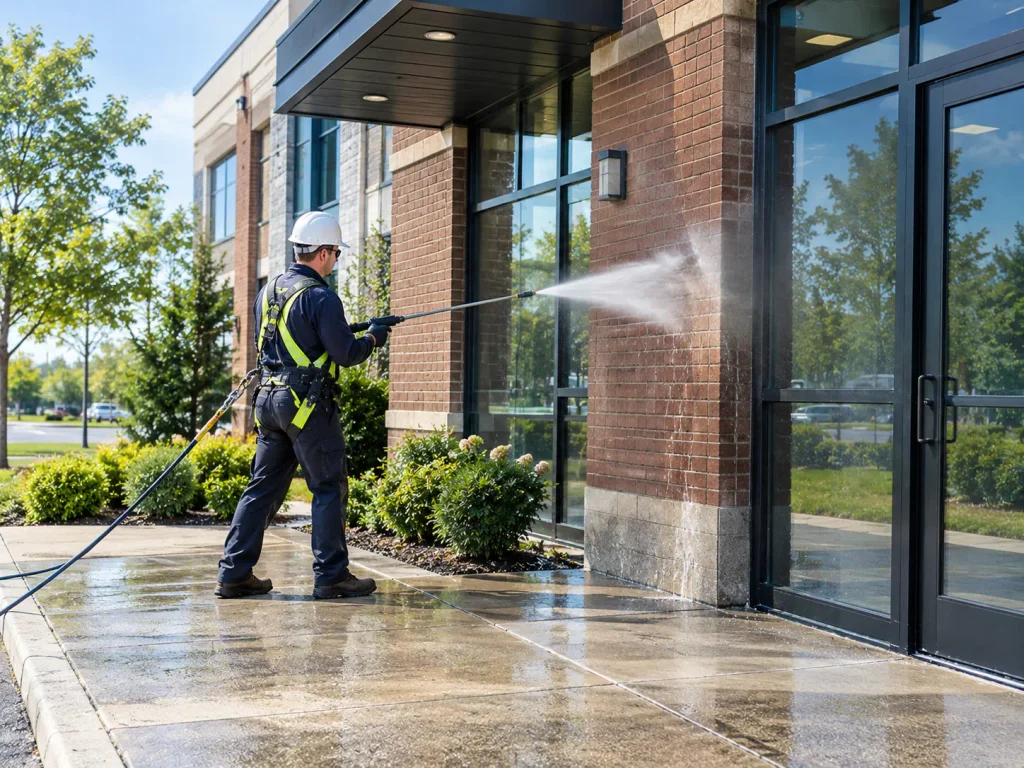
The nozzle shapes how that force actually hits the surface. A wide fan nozzle spreads the water out for large areas like driveways and siding. A narrower nozzle concentrates the same pressure into a tighter stream, which cleans faster but carries more risk.
Crews who understand nozzle selection can adjust for the surface in front of them instead of running one setting on everything. That distinction alone separates a clean building from a damaged one.
Common Surfaces It Handles Well
Pressure washing suits sidewalks, driveways, vinyl siding, fencing, and most standard concrete surfaces. It is the gentler of the two methods, which makes it the safer default for painted trim, softer masonry, and anything with older caulking around windows or doors.
What Power Washing Actually Means
Power washing takes the same high-pressure setup and adds a heating element. Water can reach up to 200 degrees Fahrenheit or higher, depending on the unit.
That added heat changes what the equipment can realistically clean, and it changes the price too, since heated units cost more to run and maintain.
The Role of Heated Water
Heat breaks down oil, grease, and gum in a way cold water alone cannot. That makes power washing the stronger choice for loading docks, dumpster pads, and drive-thru lanes, where grease and diesel residue build up fast and stay stuck to the surface.
Where Power Washing Outperforms Pressure Washing
Heavy grease stains, chewing gum stuck to concrete, and years of embedded grime all respond better to hot water. When delivering exterior cleaning services in Vaughan, power washing typically gets there faster and needs fewer passes to finish the job, which can offset the higher equipment cost on larger properties.
The Core Differences Property Managers Should Track
The two methods look similar from a distance. A crew shows up, connects equipment, and blasts water at a surface. The differences that actually matter happen underneath that surface, not in how the job looks from the parking lot.
PSI and Temperature
Pressure washing relies entirely on mechanical force to lift dirt and grime. Power washing splits the work between force and heat, which lowers the pressure actually needed to get the same result on tougher stains.
Most commercial pressure washing equipment operates between 1,300 and 2,800 PSI, while power washing adds heated water reaching up to 200 degrees Fahrenheit for tougher buildup.
Cleaning Power vs Surface Risk
More cleaning power is not always the goal. The real question is whether a given surface can handle the method without damage. Brick, older mortar, painted wood, and aluminum siding all have limits that heat and pressure can push past quickly.
A crew that treats every surface the same way is the biggest risk factor on any property, more than the equipment itself.
Which Method Fits Which Surface
Matching the method to the surface is the entire job. Get this wrong and a building ends up looking worse, not better, and often costs more to repair than it would have cost to clean correctly the first time.
Facades, Brick, and Stone
Brick and stone are durable, but the mortar holding them together is not. Excessive pressure at close range can blow out mortar joints and trigger efflorescence, the chalky white residue that shows up once moisture gets somewhere it should not be.
Facades typically only need cleaning once or twice a year, which makes getting the method right on that single visit even more important.
Parking Lots and Loading Docks
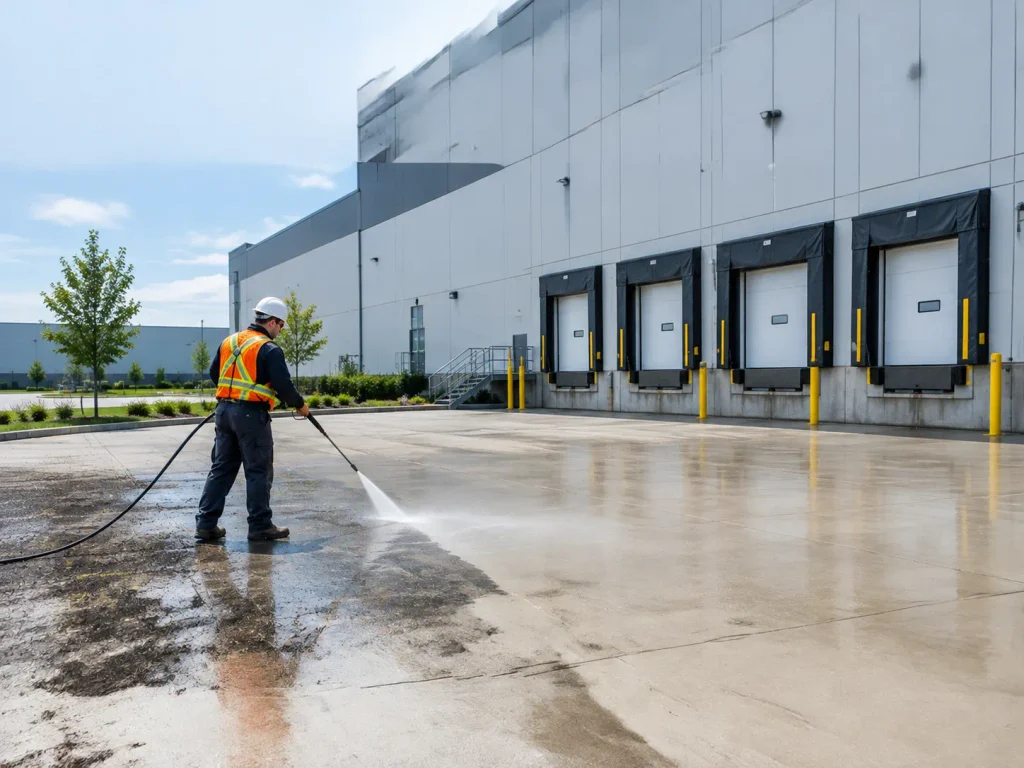
Parking lots collect oil, tire marks, and compacted debris that cold water alone often struggles to fully lift. Loading docks are worse, with diesel residue and grease that really only respond to heat. Both areas usually call for power washing over standard pressure washing.
Catch basins near these areas also matter. Runoff from either method needs to be managed properly so oil and cleaning solution do not end up where they should not.
Sidewalks and Entryways
High-traffic sidewalks and entryways pick up gum, food residue, and dirt fast. These surfaces generally handle pressure washing well and typically need attention every one to three months in busy commercial locations, more often near retail entrances.
Facade pressure washing for commercial buildings typically runs from $0.10 to $0.50 per square foot, depending on the surface and how much buildup has accumulated.
Soft Washing as a Third Option
Some surfaces do not respond well to either method at full strength. Painted stucco, older siding, and delicate coatings often do better with soft washing, a low-pressure approach that relies on a cleaning solution such as diluted sodium hypochlorite along with an algaecide to kill growth at the root instead of just blasting it off the surface.
Soft washing takes longer to work since the solution needs dwell time, but it protects surfaces that pressure alone would damage.
Why the Wrong Choice Can Cause Damage
Choosing the wrong method is not just a cosmetic risk. It can shorten the life of a surface and create bigger repair bills down the line, often well past what the original cleaning would have cost.
Signs a Surface Was Cleaned Incorrectly
Look for chalky white staining on brick, bent or dented vinyl siding, torn wood fibers, or paint that lifted right off the wall. Any of these point to too much pressure, the wrong nozzle, or the wrong method entirely.
Cracked Mortar and Stripped Paint
Mortar joints are softer than the brick around them. Too much pressure at close range chews through mortar before it even touches the brick face. Painted surfaces react the same way. A concentrated nozzle held too close can strip paint down to bare wood or siding in seconds.
Stripped Sealants and Coatings
Caulking around windows and doors, along with protective sealants on stucco and stone, can fail under high pressure. Once a seal breaks, water gets behind the surface, which leads to mold, mildew, and structural moisture damage that costs far more to fix than the cleaning ever would.
Safety and Liability Reasons Property Managers Care About This
Exterior cleaning is not just about appearance. It is a liability issue every property manager needs to take seriously, especially on properties with heavy foot traffic.
Slip and Fall Risk from Algae and Mildew
Algae and mildew on sidewalks and entryways create a real hazard, especially after rain, and the risk grows the longer a surface goes uncleaned.
Slip and fall incidents make up more than 61 percent of total incurred losses in general liability claims, which is why clean walkways matter as much as clean windows.
Certifications That Matter for High Rise and Commercial Work
Anyone accessing a facade above ground level needs proper training and equipment, not just a pressure washer and a ladder. Rope access, bosun chair, and swing stage work all require Working at Heights certification, WSIB compliance, and full commercial liability insurance.
These are not paperwork formalities. They protect the crew doing the work, the building itself, and the property manager who hired them if anything goes wrong.
What a Professional Assessment Looks Like
A proper assessment walks the property surface by surface instead of quoting one flat rate for everything. It notes which areas need pressure washing, which need power washing, and which need soft washing instead, along with a realistic schedule for each.
That level of detail is the difference between a one-time clean and a maintenance plan that actually protects the building.
How Often Commercial Properties Should Schedule Either Method
A defined schedule is easier to budget than waiting until a building looks bad enough to justify calling someone.
Facades and Building Exteriors
Most commercial facades only need pressure washing once or twice a year. Buildings near busy roads or with heavy tree cover nearby may need slightly more frequent attention to keep pace with buildup.
High-Traffic Walkways and Entrances
Entryways and sidewalks in high-traffic commercial areas hold up best on a one to three month cleaning cycle. Parking lots with heavy vehicle traffic follow a similar rhythm, typically every three to six months depending on how busy the property is.
Winter and Salt Residue in Ontario
Ontario winters add another layer to this schedule. Road salt tracked onto sidewalks, entryways, and parking structures leaves a residue that plain rinsing does not fully remove. A spring cleaning pass, timed after the salt season ends, is often the most important appointment on the whole yearly calendar.
For property managers who also handle glass and window maintenance on the same building, our guide on how often high rise windows should be cleaned covers a similar seasonal rhythm worth planning around together.
If a building needs a proper commercial pressure washing plan built around its specific surfaces, that is exactly the kind of pressure washing services worth scheduling before small problems turn into expensive ones.
Andean High Rise Window Cleaning Serving the Sherwood Community and Beyond in Vaughan
Properties near Castlehill Park see the same seasonal buildup as anywhere else in the region, and buildings along the Rutherford Rd and Keele St corridor deal with the added grime that comes from heavier traffic. Our crews work throughout the Sherwood area and the wider Vaughan region, from coordinates near 43.8381822, -79.5076454 out to every commercial and residential property that needs a proper assessment.
Get Pressure Washing Service in Sherwood Now
Navigate from Sherwood to Andean High Rise Window Cleaning Now
Frequently Asked Questions
What is the main difference between pressure washing and power washing?
Pressure washing uses cold water force alone. Power washing adds heat, which makes it more effective on grease, oil, and heavily embedded grime.
Does pressure washing damage brick, siding, or concrete?
It can, if the PSI is too high or the nozzle sits too close to the surface. Mortar joints, painted wood, and aluminum siding are the most vulnerable to this kind of damage.
How often should a commercial building doing pressure washing in Vaughan be cleaned?
Most facades need attention once or twice a year. High-traffic sidewalks and parking lots typically need cleaning every one to six months depending on foot and vehicle traffic.
Is soft washing better than pressure washing for painted surfaces?
For painted stucco, older siding, and delicate coatings, soft washing at lower pressure with the right cleaning solution often protects the surface better than standard pressure washing.
Why do property managers need Working at Heights certification for exterior cleaning?
Any facade work above ground level involves fall risk. Working at Heights certification, WSIB compliance, and full liability insurance protect the crew and the building owner if anything goes wrong on the job.