


Wait at least 48 hours after power washing before you stain a deck. Plan on 72 hours if the weather is cool, humid, or shaded. The wood has to dry all the way through, because stain cannot soak into damp boards. This guide explains why, how to check, and how weather across the Greater Toronto Area changes the timing for anyone planning power washing in Vaughan.
The Short Answer: Wait 48 to 72 Hours Before Staining
You want a simple number. Here it is: 48 to 72 hours.
That window assumes dry weather, steady airflow, and a wood deck washed at a sensible pressure. Change any of those, and the number moves.
Most guidance puts the safe wait before staining a power washed deck at 48 to 72 hours, and longer when conditions are cool, humid, or shaded.
Think of a washed deck like a wet sponge. The surface can feel dry in a few hours. The inside is a different story.
Why 24 Hours Is Usually Not Enough
Some guides say 24 to 36 hours works in warm, dry weather. That can be true for a small deck in full sun after a light wash.
It is a narrow case, though. Most decks do not fit it. A shaded corner or a thick board can hold moisture long after the top looks dry.
If you are unsure, wait. A spare day costs nothing. A failed finish costs a weekend and a lot of stain.
When 48 Hours Is Enough
Two days usually works when the weather is warm and breezy. It also helps when the deck gets sun for most of the day and the wood is a softwood like cedar. Low humidity makes it easier still.
Even then, test the boards before you open the can. Looks can mislead you.
When You Need 72 Hours or More
Go longer when any of these apply:
- Temperatures stay cool, or nights drop close to freezing.
- The deck sits in shade under a roof, a tree canopy, or the north side of a building.
- Rain or heavy dew showed up after the wash.
- The boards are dense pressure treated lumber or a hardwood.
- The wash was aggressive and pushed lots of water into the grain.
Any one of these can add a day or two. Several together can add a week.
Why Wet Wood Rejects Stain
Stain only works when it can get into the wood. Water blocks that path.
How Stain Soaks Into Wood
Wood is full of tiny channels. Penetrating stain, especially oil based types, flows into those channels and bonds with the fibers. That bond is what protects the board from sun and rain.
When the channels already hold water, the stain has nowhere to go. It sits on top instead.
What Trapped Moisture Does Under a Fresh Coat
Surface stain does not grip well. It also seals water inside the board. That water has to leave somehow, and it pushes outward through the new finish.
The result shows up fast. Sometimes it takes a season. Either way, the damage is the same.
Peeling, Blotching, and a Cloudy Finish
You may see uneven color where some boards drank the stain and others did not. You may see a milky haze across the surface. Within a few months, edges and high traffic spots start to peel.
Mold and Mildew Under the Stain
Moisture sealed under a coat is also a comfortable home for mildew. Dark spots can appear under the finish. At that point, you are stripping, washing, and starting over.
How Drying Time Changes in Real Conditions
No two decks dry the same way. Five things matter most.
Weather and Humidity
Warm, dry, breezy days pull moisture out of wood quickly. Cool, damp, or humid days slow it down a lot. Fog and heavy dew can even add water back overnight.
Check the forecast for the full wait period, not just the day you plan to stain.
Sun and Shade
A deck in full sun can dry in two days. The same deck under a covered patio or a tree canopy can take twice as long. Even on one deck, the boards by the house wall may lag behind the sunny ones.
Wood Type and Age
Softwoods like cedar and spruce tend to dry faster than dense hardwoods. Pressure treated lumber holds more moisture because of how it is treated. A brand new pressure treated deck often needs several weeks to dry out before its first stain, so follow the lumber and stain labels.
Older, weathered boards behave differently. They soak up water quickly and release it quickly. Dense, sealed boards do the opposite.
How Hard the Deck Was Washed
More pressure forces more water into the grain. It can also raise and fray the wood fibers. For wood decks, many pros stay at the lower end of the PSI (pounds per square inch) range and keep the nozzle moving at a safe distance.
Gentler washing means less water in the board and a shorter wait.
Can You Speed Up Drying?
A little, yes. Sweep standing water off the boards. Move planters, mats, and furniture so air reaches every board. Clear leaves and debris from the gaps between boards.
Do not cover the deck with a tarp. Trapped air stays damp and slows everything down. Let the weather do the work.
Two Simple Ways to Check Whether a Deck Is Dry
Do not guess. Check.
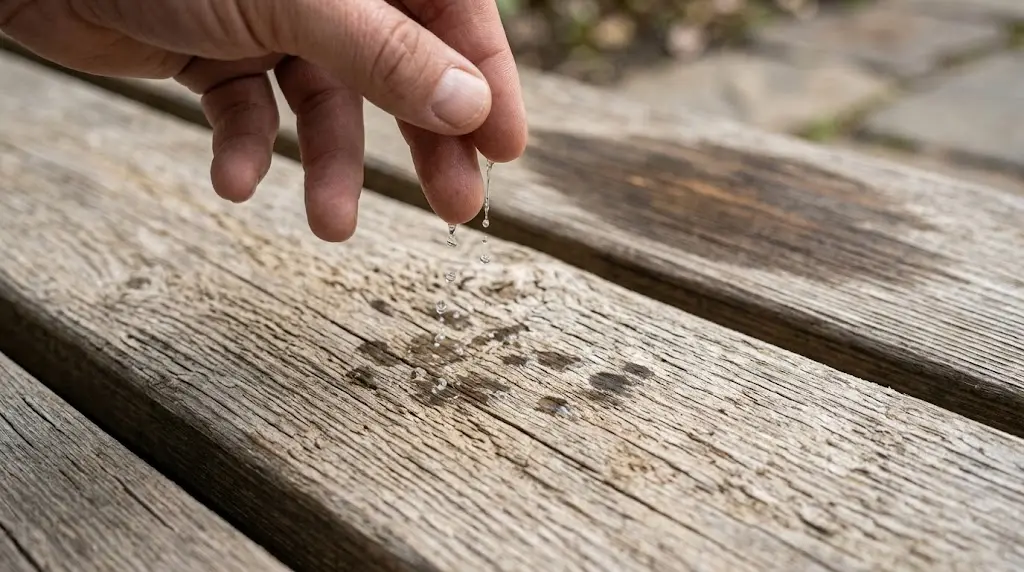
The Water Drop Test
Sprinkle a few drops of water on several boards. Include shaded spots and the ends of boards, where moisture hides longest.
If the water soaks in within a minute or two, the wood is ready. If it beads up on the surface, the wood either still holds moisture or has old sealer on it. Wait longer, then test again.
Using a Moisture Meter
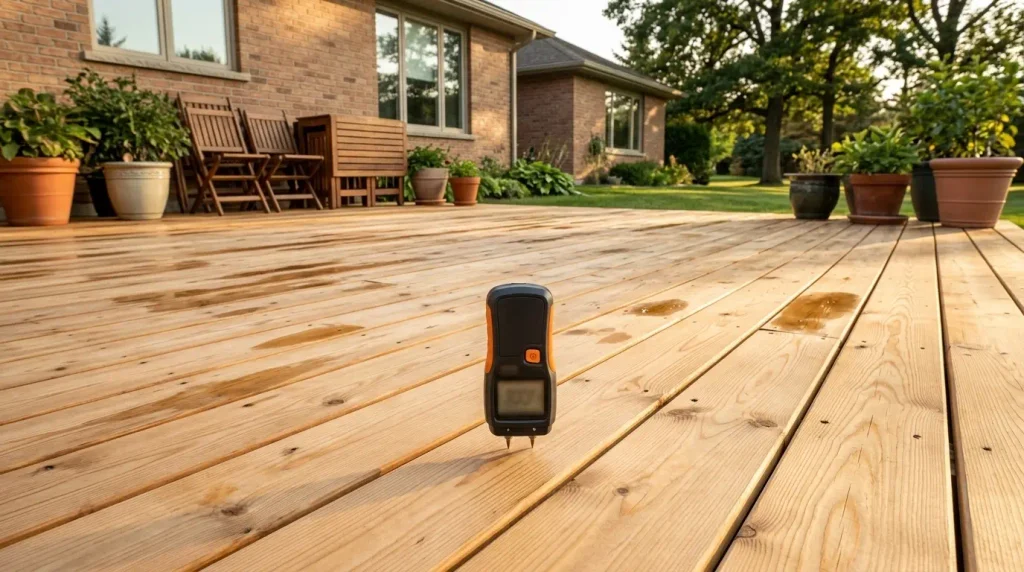
A pin type moisture meter reads moisture content right inside the board. Press the pins into several boards in different parts of the deck. Then compare the readings.
Most stain makers want deck wood at roughly 12 to 15 percent moisture content or lower before the first coat goes on.
Check the stain label too. Some products set a firm number, and the label wins over any general rule.
Does the Stain Type Change the Wait?
Slightly. Oil based stains soak deep, so they are the least forgiving of damp wood. Water based stains tolerate a little more moisture, but they still bond poorly to soaked boards. Solid color stains sit more on the surface, yet trapped water can still lift them.
In every case, dry wood gives the longest lasting result. Read the can for the maker’s own drying window.
Staining Weather in the Greater Toronto Area
Timing a stain here means watching the sky as much as the clock. Spring and fall swing between damp and dry. That matters for anyone planning power washing Vaughan properties and staining right after.
Decks near Hwy 7 and Martin Grove Rd in Woodbridge see the same swings as anywhere else in the Greater Toronto Area. A bright morning can turn into a damp evening in a few hours.
Spring and Fall Windows
Late spring and early fall often give the mix of mild days and lower humidity that stain likes. Summer can work too. Very hot, direct sun can make stain dry too fast on the surface, so shade the work or start early.
Temperature Limits and Overnight Lows
Most stains list a minimum application temperature, often around 10 degrees Celsius (50 degrees Fahrenheit). Some list a maximum as well. Cold nights matter, too, because low temperatures and dew slow curing.
Always follow the product label. It is the final word.
Rain After Staining
Fresh stain needs time to cure. Rain too soon can streak or wash out the finish. Many labels call for about 24 hours of dry weather after application.
Check a multi day forecast before you start. Then book the work for the middle of a dry stretch.
What to Do Between Washing and Staining
The wait is not dead time. A few steps set up a stronger finish.
Rinse Off Cleaners and Brighteners
If you used a deck cleaner or a brightener, rinse it fully. Leftover residue can block stain or shift its color. Rinsing adds water, so allow the deck to dry again afterward.
Lightly Sand Raised Grain
Washing can lift wood fibers and leave a fuzzy feel. Once the deck is fully dry, a light pass with a sanding pad smooths the surface. Sweep or blow off the dust before you stain.
Protect Nearby Surfaces
Cover siding, door thresholds, and plants. Tape off edges. Drips are easy to prevent and hard to remove.
Check for Old Stain and Sealer
Water that beads on a washed deck often points to old sealer that never came off. New stain cannot bond to a leftover film of the old one.
Look for patches where the surface looks glossy or the color seems uneven. If the old finish is failing, strip it before you stain. If it is still sound, a deck cleaner and a light wash may be enough. Either way, let the wood dry fully again afterward.
Plan the Stain Day
Choose a stretch of dry days. Start early. Work in sections along the length of each board to avoid lap marks. Keep foot traffic and pets off until the label says the finish is safe.
Bring enough stain to finish each section without stopping halfway. Breaks in the middle of a board show up as lines once the finish dries.
Mistakes People Make When Timing the Stain
These four come up again and again.
Staining the Same Day
It looks dry, so people go ahead. The inside says otherwise. Same day staining is the fastest route to a peeling finish.
Trusting Only the Calendar
A set number of days helps. Weather is the real clock, though. A rainy weekend resets the wait. Test the deck, not the date.
Waiting Too Long After the Deck Dries
Once the wood is dry, do not let it sit for weeks. Clean, bare wood takes stain well. But UV (ultraviolet) light, rain, and dirt start dulling that fresh surface within days. Stain soon after the boards pass the test.
Ignoring the Label
Every stain has its own rules for temperature, spread rate, recoat time, and cure time. Read them. Manufacturer instructions outrank any general guide, including this one.
What If You Already Stained Too Early?
It happens. If the finish looks blotchy or tacky within a day or two, stop adding coats. A second coat over damp wood only traps more water.
Let the deck dry for several days of good weather. Then check for peeling, haze, or dark spots. Light problems may only need a gentle sanding and a thin touch up coat.
Bigger problems usually mean stripping the finish and washing the deck again. That is slower, but it gives the new stain a clean, dry surface to grip. Start over with the water drop test this time.
How Often to Power Wash and Stain a Deck
Most deck care follows a yearly rhythm.
Most contractors recommend cleaning a wood deck about once a year, which makes timing the stain after each wash a yearly decision.
How often the stain itself needs renewal depends on the product, the sun, and the foot traffic. The label gives a starting point. The deck tells you the rest.
Here is a simple signal. When water stops beading on the surface and starts soaking in, the old finish has worn thin. That is your cue.
Commercial and Residential Decks: Do the Same Rules Apply?
Yes. Wood does not care who owns it.
Commercial properties have decks too. Think condo terraces, restaurant patios, townhouse complex walkways, and boardwalk style paths. They see more foot traffic and more weather. A closed patio during a long wait also costs more than a quiet backyard deck, so planning the schedule matters.
Homeowners face the same wood, the same moisture, and the same wait. The only difference is scale.
Why Safety Comes First on Raised Decks
Elevated decks add a safety angle. Working on a raised terrace or a balcony means working at height. Anyone doing that work should have proper training, fall protection, and full liability insurance. Crews at Andean High Rise Window Cleaning are Working at Heights certified and WSIB (Workplace Safety and Insurance Board) compliant on every job.
Choosing the Right Cleaning Method First
The method you pick for the wash affects how long the deck takes to dry. If you want to compare the options, our guide on pressure washing vs power washing explains how each one treats different surfaces.
For larger properties with several surfaces, a commercial pressure washing assessment can map out which areas need which method. That keeps the wash and the stain schedule in step.
Andean High Rise Window Cleaning Serving the Woodbridge Community and Beyond in Vaughan
Properties near Mapes Park deal with the same seasonal swings as every other part of the region. Decks and terraces along the Hwy 7 and Martin Grove Rd corridor see added road dust and traffic grime, which makes a proper clean before staining even more useful. Our crews work throughout Woodbridge and the wider Vaughan area, from coordinates near 43.7803544, -79.6153175 out to every commercial and residential property that needs a clear assessment.
Get Power Washing in Woodbridge Service Now
Our High-Rise Window Cleaning Coverage in Woodbridge & Surrounding GTA
So, how long after power washing can you stain a deck? Give it 48 to 72 hours as a baseline. Add time for cool, humid, or shaded conditions. Then confirm with a water drop test or a moisture meter before you open the can.
Patience is the cheapest step in the whole job. It protects the wood, the stain, and your weekend. Skip it, and you will likely repeat the work within a year.
If you manage a property or a home and want a hand with the washing side, our power washing services start with a site assessment. We also cover exterior cleaning services in Vaughan and the wider Greater Toronto Area.
Frequently Asked Questions
How long should a deck dry after power washing before staining?
Most decks need 48 to 72 hours of dry weather. Cool, humid, or shaded decks can need longer. Test the boards before you stain.
Can I stain a deck the day after power washing it?
Only in warm, dry, breezy conditions with a light wash and a softwood deck. Even then, run the water drop test first. If water beads up, wait another day.
How do I know if my deck is dry enough to stain?
Sprinkle a few drops of water on several boards. If they soak in within a minute or two, the wood is ready. A moisture meter reading of roughly 12 to 15 percent or lower also works.
What happens if you stain a deck too soon after power washing?
Trapped moisture keeps stain from soaking in. The finish can peel, blotch, turn cloudy, or grow mildew underneath, and you may need to strip and redo the job.
Does rain after power washing mean I have to wait longer when planning power washing in Vaughan?
Yes. Rain adds water back into the boards, so the wait starts over. Check the forecast and test the deck again before staining.