
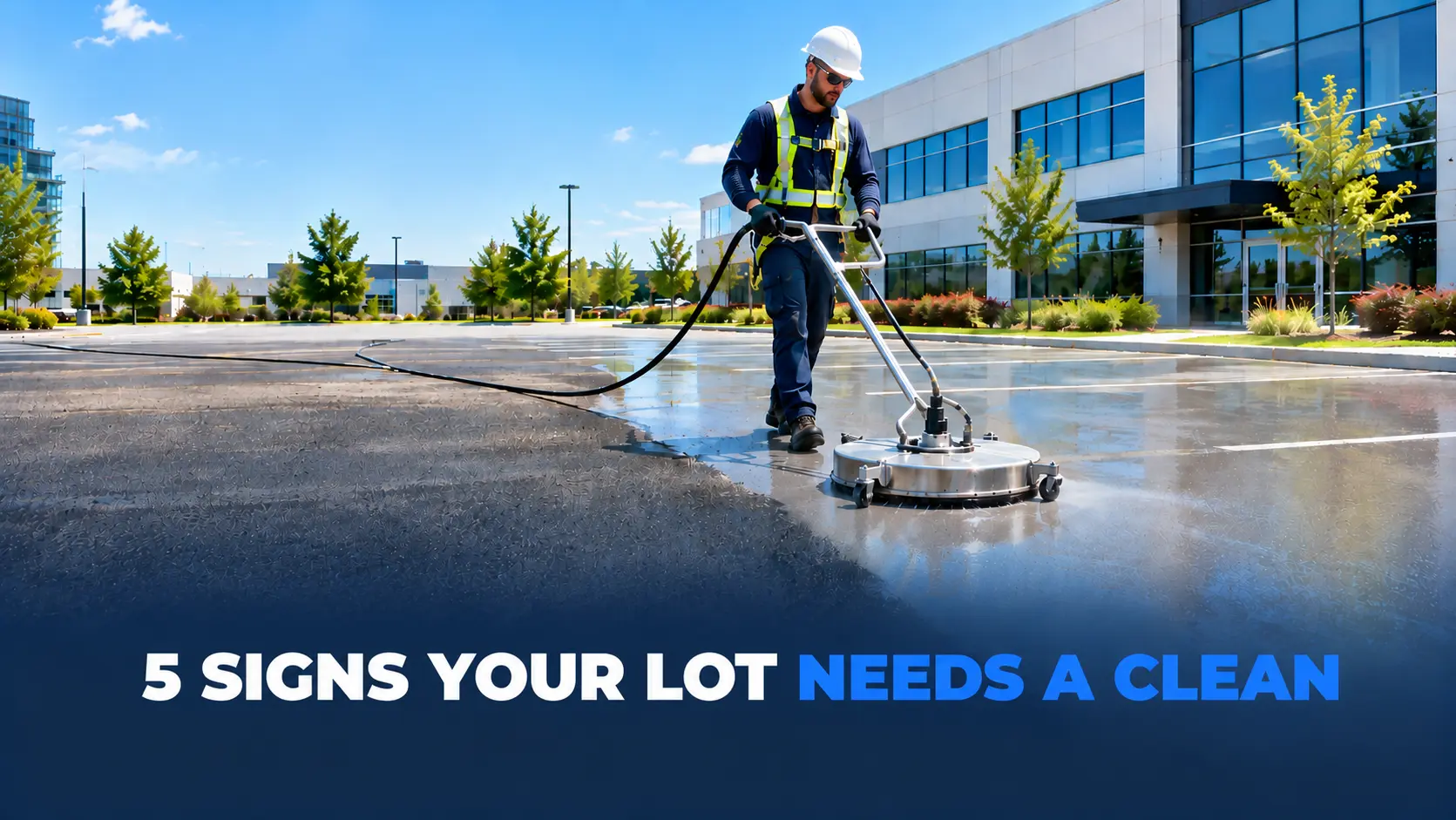
Oil stains, algae patches, weeds pushing through cracks, and dark discoloration near drains are the clearest signs a parking lot or sidewalk needs professional pressure washing. Left alone, these problems do not just look bad. They create slip hazards, speed up pavement wear, and make a well-kept property look neglected to every visitor who walks across it.
Most property managers catch these signs eventually. The goal is catching them early, before a stain sets in or a crack turns into a bigger repair.
Why Parking Lots and Sidewalks Get Overlooked
Facades get attention because they are visible from the street. Parking lots and sidewalks sit under everyone’s feet, which somehow makes them easier to ignore.
That is backwards. These are the surfaces tenants, customers, and visitors actually touch and walk across every single day. A stained facade is a cosmetic issue. A slippery sidewalk is a liability issue.
Sign 1: Oil Stains and Tire Marks That Will Not Fade
Oil stains are usually the first sign anyone notices, mostly because they stand out against lighter pavement.
Why Oil Stains Keep Spreading
Oil is porous-surface enemy number one. Asphalt and concrete both absorb it over time, which means a stain that starts small keeps spreading with every car that parks in the same spot. Rain does not wash it away. It just pushes the oil deeper into the surface.
What Happens If They Are Left Untreated
The longer a stain sits, the harder it becomes to lift fully. Deep staining eventually needs a dedicated detergent pass before pressure washing even starts, which adds time and cost compared to catching it early.
Sign 2: Algae, Moss, or Mildew in Shaded and Damp Areas
Shaded corners, areas under overhangs, and anywhere water tends to pool are prime territory for algae and mildew growth.
Where This Growth Shows Up First
Look at the north-facing side of a building, under stairwells, and along curb lines where sprinklers or runoff keep the pavement damp. These spots will show growth well before the rest of the lot does.
The Safety Risk Behind the Discoloration
Algae and mildew are not just a staining problem. Both get slick when wet, and a shaded entryway that looks fine on a dry day can turn into a slip hazard the moment it rains.
Mold and algae can begin forming on damp, shaded pavement within 24 to 48 hours, which is why these areas need more frequent checks than open, sun-exposed surfaces.
Sign 3: Weeds or Grass Growing Through Cracks and Joints
A few weeds pushing through pavement joints look like a landscaping issue. They are actually a pavement issue.
Why This Is More Than a Weed Problem
Weeds need a crack to grow through in the first place. Once roots take hold, they widen that crack further, which lets in more water and speeds up freeze-thaw damage.
How Trapped Moisture Damages Pavement
Water that collects around root systems has nowhere to go. In colder months, it freezes, expands, and pushes the crack wider still. Pressure washing in Vaughan combined with proper joint maintenance interrupts that cycle before it compounds.
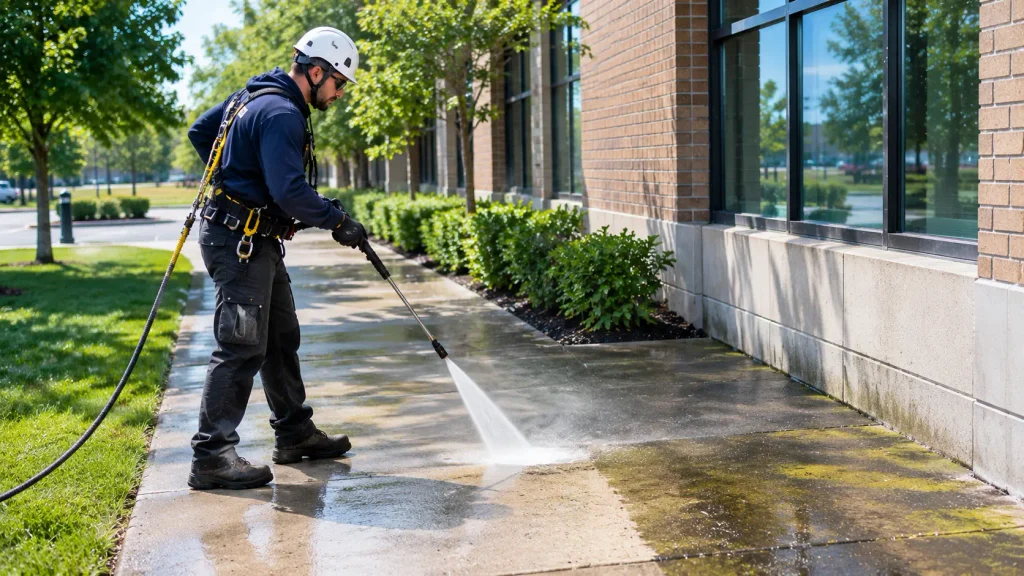
Sign 4: Standing Water or Dark Staining Near Drains and Catch Basins
Drainage problems rarely announce themselves until they are already a mess.
What Pooling Water Usually Means
Standing water after a rain means the surface is not draining the way it was designed to. Sediment, oil, and debris settle in those low spots, which leaves dark rings and staining behind even after the water clears.
Why Catch Basins Need Attention Too
Catch basins collect everything that runs off a parking lot or sidewalk, which means they clog with the same debris, oil, and grime that builds up everywhere else. A pressure washing visit that includes catch basin areas keeps drainage working the way it should.
Sign 5: Faded Curb Appeal, Gum, and Grime Near Entrances
Entrances take more foot traffic than any other surface on the property, and it shows.
Why First Impressions Start at the Parking Lot
Visitors form an opinion about a property before they ever reach the front door. Gum stuck to the pavement, grime built up along curb lines, and faded, dirty surfaces near the entrance all work against that first impression.
High-Traffic Entryways Need More Frequent Attention
Because entryways see so much use, they need a shorter cleaning cycle than the rest of the property. Letting them go on the same schedule as a low-traffic area almost always means they look worse than everything around them.
How Often Parking Lots and Sidewalks Actually Need Pressure Washing
Catching these five signs early is easier with a defined schedule instead of waiting for a complaint.
Parking Lots with Heavy Vehicle Traffic
High-traffic commercial parking lots typically need pressure washing every 3 to 6 months to stay ahead of oil and grime buildup.
Sidewalks and Entryways
Lower-traffic sidewalks can often go about once a year between cleanings. Busy entryways and storefront walkways need far more frequent attention, typically every one to three months.
Seasonal Factors in Ontario
Road salt tracked across sidewalks and parking lots all winter leaves a residue that plain rain does not rinse away. A spring pressure washing pass, timed after the salt season ends, catches both the salt residue and whatever grime built up underneath it.
Why Ignoring These Signs Becomes a Liability Issue
A stained parking lot is a maintenance issue. A slippery one is a liability issue, and the two problems usually show up together.
Slip and Fall Risk
Slip and fall incidents make up more than 61 percent of total incurred losses in general liability claims, and algae, oil, and standing water are among the most common causes on commercial properties.
Insurance and Property Management Considerations
Many commercial insurance policies expect reasonable upkeep of walking surfaces as part of standard due diligence. A documented pressure washing schedule is one of the simplest ways to show that upkeep actually happened, not just that it was supposed to.
Choosing the Right Method for Each Surface
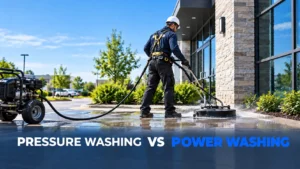
Not every one of these five signs calls for the same approach. Oil and grease on a loading area usually need heat to break down fully, while a sidewalk covered in algae responds well to standard cold water pressure washing. Our guide on pressure washing vs power washing for property managers walks through exactly when each method applies.
For a property with multiple problem areas, a proper commercial pressure washing assessment is worth scheduling before deciding on a single approach for the whole lot. Our pressure washing services start with exactly that kind of walkthrough.
Andean High Rise Window Cleaning Serving the Humber Summit Community and Beyond in Vaughan
Properties near Vaughan Grove Sports Park see the same seasonal buildup as anywhere else in the region, and lots along the Hwy 7 and Martin Grove Rd corridor deal with heavier traffic and faster grime buildup because of it. Our crews work throughout the Humber Summit area and the wider Vaughan region, from coordinates near 43.7731260, -79.5527175 out to every commercial and residential property that needs a proper assessment.
Get Pressure Washing Humber Summit Service Now
Our High-Rise Window Cleaning Coverage in Humber Summit & Surrounding GTA
Frequently Asked Questions
What is the most common sign a parking lot needs pressure washing?
Oil stains and tire marks are usually the first and most visible sign, since they stand out against lighter pavement and keep spreading the longer they sit.
Why does my sidewalk have algae or mildew buildup?
Shaded, damp spots like areas under overhangs or along curb lines where water pools are prime conditions for algae and mildew to form, often within a day or two.
How often should a property doing pressure washing in Vaughan clean its parking lot?
High-traffic commercial parking lots typically need pressure washing every three to six months, while lower-traffic sidewalks can often go about once a year.
Can weeds growing through pavement cracks actually cause damage?
Yes. Weed roots widen existing cracks, and trapped moisture around those roots freezes and expands during winter, making the crack worse over time.
Is a dirty parking lot really a liability risk?
It can be. Algae, oil, and standing water are common causes of slip and fall incidents, which make up a large share of general liability claims on commercial properties.