
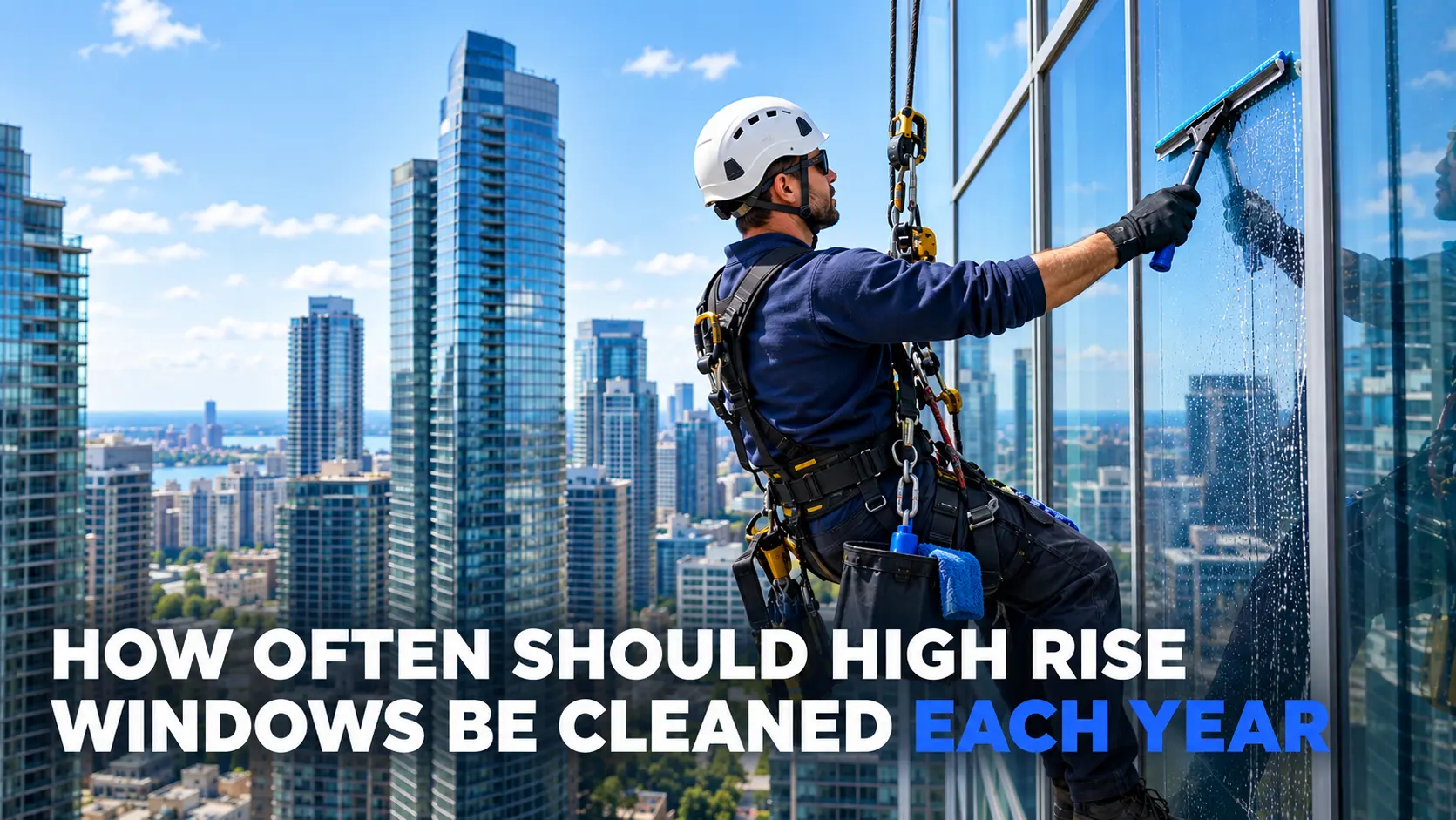
Most high rise buildings need professional exterior window cleaning two to four times a year. The right number for your building depends on location, height, facade type, and how much wind, dust, and rain the glass takes on through the seasons. Buildings along busy corridors or near construction sites often need more frequent attention, while upper floors on quieter stretches can go longer between visits. This guide breaks down what actually drives that schedule, what happens when cleaning gets pushed back too long, and how property managers across Vaughan and the wider Greater Toronto Area plan their calendar year.
The Short Answer: Two to Four Cleanings a Year for Most Buildings
If you manage a high rise property, you probably want a number before you want a lecture on facade science. Here it is.
Most commercial high rise buildings in Ontario land somewhere between two and four professional cleanings a year. Office towers with heavy street-level exposure often sit at the higher end. Quieter residential towers can sometimes stretch to once or twice.
That range holds up across most of the guidance property managers rely on, whether they are looking at a Class A office tower downtown or a mid-rise condo further out.
Why There Is No Single Number for Every Building
No two facades collect grime at the same rate. A glass curtain wall facing a highway will look dirty long before a brick-and-window facade set back from the road.
Height matters too, but not in the way most people assume. Ground-level and lower-floor glass often gets dirtier faster than the upper stories, since it sits closer to exhaust, dust, and road salt.
So the honest answer is always a range, not a fixed number. The next sections break down exactly what shifts a building toward the low end or the high end of that range.
What Actually Determines High Rise Window Cleaning Frequency
A handful of factors do almost all the work in setting a realistic high rise window cleaning schedule. Once you know them, building a plan gets a lot easier.
Location and Street-Level Exposure
Buildings near major roads, construction zones, or industrial areas collect airborne grime faster than buildings in quieter pockets. Vaughan has plenty of active development, so dust from nearby construction sites can shorten the window between cleanings.
Coastal cities deal with salt spray. Here in the GTA, it is winter road salt, spring pollen, and summer dust that do most of the damage.
Vaughan in particular has a lot of active development. New construction throws fine concrete and drywall dust into the air, and that dust settles on nearby glass faster than most property managers expect. A building next to a finished site might need cleaning twice a year. The same building next to an active site could need three or four visits until the dust settles.
Building Height and Facade Type
Taller buildings are not automatically dirtier. What matters more is the type of glass, how the facade is angled, and whether the building has deep-set windows, a flat curtain wall, or a mix of both.
Flat, reflective curtain wall glass shows dirt and streaking faster than smaller, recessed residential-style windows. That is one reason two buildings of similar height can need very different schedules.
Curtain Wall Versus Traditional Window Facades
A full glass curtain wall acts like one continuous surface, so dirt and streaking are visible across the whole elevation the moment they show up. Traditional facades, with smaller individual window units set into brick or precast panels, tend to hide light dust a little longer since each pane is a smaller visual break in the surface.
That does not mean traditional facades need less care. It just means the visual cue that tells a property manager “it is time” tends to arrive later, which is exactly why relying on how the glass looks rather than a set calendar can lead to buildings going far longer between cleanings than they should.
Weather Across the Greater Toronto Area
Ontario weather swings hard between seasons, and that swing affects glass more than most people expect. Winter brings road salt and slush spray. Spring brings pollen. Summer brings dust, pollution, and the occasional hard rain that leaves mineral spotting behind.
That is one statistic worth knowing when you plan a calendar: most high rise buildings need professional exterior cleaning two to three times a year to stay ahead of that seasonal buildup before it turns into permanent staining.
Building Function: Office, Condo, or Hotel
Office towers usually want a spotless facade year round, since first impressions matter for tenants and visitors. Condos and residential towers can often stretch the schedule a little further without residents noticing much difference. Hotels tend to land somewhere in between, especially in tourist-heavy seasons.
Typical Cleaning Schedules by Building Type
Here is a general breakdown of what property managers commonly land on, building type by building type.
Class A Office Towers
Two to three cleanings a year is typical, often timed for spring and fall with an extra pass before major leasing tours or events.
Luxury and Mid-Rise Condos
Most luxury and mid-rise condo buildings land around two cleanings a year, spring and fall, which keeps glass clear through both the pollen season and the post-winter salt buildup.
Hotels and Hospitality Buildings
Hotels often schedule two to three cleanings a year, occasionally adding a pass ahead of a busy season or a major booking period.
Industrial and Warehouse Facilities
Industrial and warehouse facilities usually need less frequent full facade cleaning, often once a year, unless the site sits near heavy dust or particulate sources.
Mixed-Use Buildings
Mixed-use properties, where retail sits below residential or office floors, often end up on a split schedule. The ground-floor retail glass gets cleaned more often for curb appeal, while the upper residential or office floors follow the standard two to three times a year pattern. It is worth asking a provider whether they can quote these separately, since bundling them under one blanket schedule can mean overpaying for the upper floors or under-servicing the storefront glass.
Signs Your High Rise Windows Are Overdue for Cleaning
A few signs tend to show up well before anyone officially schedules a cleaning.
Visible streaking or haze that does not clear on a sunny day is usually the first clue. Mineral spotting that looks almost etched into the glass, rather than sitting loosely on the surface, is a sign the buildup has been there for a while. Tenants or residents mentioning that the view looks dull or hazy is worth taking seriously, since people notice changes in their own daily view long before a property manager walking past the lobby does.
A noticeable drop in how much natural light reaches interior spaces is another sign, and it tends to sneak up gradually rather than happening all at once. Grime that is visible from the street or the parking lot, especially on the lower floors, usually means the upper floors are not far behind.
Any one of these on its own is worth a closer look. A few of them together, especially combined with it having been more than six months since the last cleaning, usually means the building is past due.
What Happens When Cleaning Is Delayed Too Long
Pushing a cleaning schedule back to save money in the short term can end up costing more later.
Mineral Deposits and Hard Water Staining
Hard water spots and mineral deposits start as a surface issue. Left long enough, they can etch into the glass and become permanent, which means a routine clean is no longer enough to restore clarity.
Reduced Natural Light and Tenant Complaints
Dirty glass blocks more natural light than most people realize. For office tenants and condo residents alike, that shows up as a dimmer, less appealing space, and it is one of the more common tenant complaints property managers hear about.
How Weather and the Seasons Affect Scheduling in Vaughan and the GTA
Vaughan sees the full range of Ontario weather, and that shapes how a certified window cleaning company in Vaughan plans its calendar. Winter road salt near busy intersections, spring pollen, and summer construction dust all add up differently depending on where a building sits.
Buildings closer to major roads and active development corridors tend to need cleaning on the higher end of the range. Properties in quieter pockets can often stretch a little further between visits.
How Safety Standards Shape the Cleaning Calendar
Safety requirements are not just fine print. They directly shape when and how a professional high rise window cleaning service can work.
Rope access, bosun’s chair, and swing stage crews all follow strict wind, weather, and anchor point rules drawn from standards like ANSI/IWCA I-14.1. Work stops when conditions are not safe, which can shift a cleaning by a day or two.
Rope access crews stop work once wind speeds pass 25 miles per hour, a safety threshold built into North American work-at-height standards.
A crew that ignores that limit is not saving you time. It is skipping a safety rule that exists for a reason, and it is worth asking any provider how they handle wind and weather holds before you sign off on a schedule.
What a Professional High Rise Window Cleaning Visit Actually Involves
A cleaning schedule is only half the picture. It also helps to know what actually happens once a crew shows up, since that process affects how long a cleaning lasts and how soon the next one is really needed.
Site Assessment and Custom Quote
A proper visit starts with an assessment, not a truck pulling up with buckets. A trained technician looks at the building’s height, facade type, anchor points, and access options, then puts together a plan and a transparent quote before any work begins. This step is also where a realistic cleaning frequency gets confirmed for your specific building rather than guessed at.
Safety Protocols and Access Setup
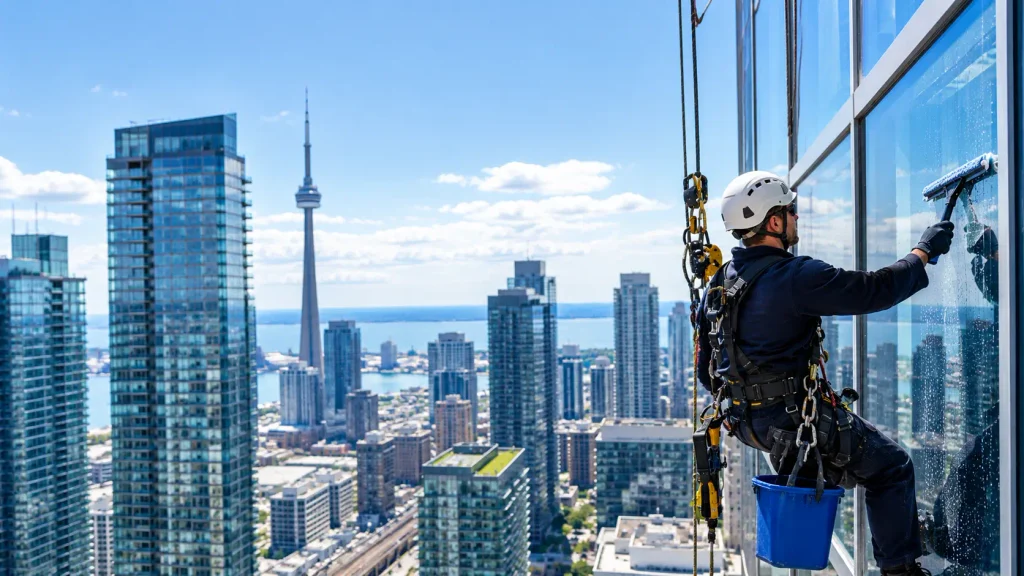
Next comes the safety setup. Depending on the building, that might mean rope access with harnesses and certified anchor points, a bosun’s chair, a swing stage, or an aerial lift. Every method comes with its own documented safety protocol, and a properly certified crew will not skip this step to save time, regardless of how simple the job looks from the ground.
Execution and Quality Approval
Once access is set up, the actual cleaning happens, glass, frames, and sills included on most jobs. A final quality check follows, walking the facade to confirm every pane meets the standard before the crew packs up. That last step is often the difference between a cleaning that lasts the full season and one that starts looking streaky again within a few weeks.
Building a Cleaning Schedule That Actually Works
The best schedule is not necessarily the cheapest one or the most frequent one. It is the one built around your specific building.
Talk to a Certified Provider First
A provider who is fully insured, WSIB compliant, and Working at Heights certified can look at your building’s height, facade, and exposure and recommend a realistic number rather than a generic one.
Andean High Rise Window Cleaning has completed work on 1,000+ buildings across Ontario over 15+ years in business.
That kind of experience across different building types is exactly what turns a guess into a real schedule.
Bundle Cleaning With Other Exterior Maintenance
Many buildings pair window cleaning with pressure washing or caulking and sealing checks during the same visit. That approach reduces disruption to tenants and often catches small facade issues, like a failing seal or a loose panel, before they become bigger and more expensive problems.
It also tends to be more efficient from a scheduling standpoint. Instead of arranging separate access setups for separate services throughout the year, a combined visit uses the same rope access or lift setup for multiple tasks, which can shorten the total time your building deals with equipment and crews on site.
If your building has never had a real high rise window cleaning vaughan schedule built for it, a free assessment is the fastest way to get one.
Communities across Humber Summit and the surrounding Vaughan area deal with a similar mix of seasonal grime, which makes a locally informed schedule worth more than a generic industry average.
Andean High Rise Window Cleaning Serving the Humber Summit Community and Beyond in Vaughan
Andean High Rise Window Cleaning works with buildings throughout Humber Summit and the greater Vaughan area, including properties near Giovanni Caboto Park and the busy Hwy 7 & Weston Rd corridor. Our crews are familiar with the local coordinates around 43.7930043, -79.5452054 and the seasonal patterns that shape a realistic cleaning schedule in this part of the GTA.
Get High Rise Window Cleaning Humber Summit Service Now
Navigate from Humber Summit to Andean High Rise Window Cleaning Now
Frequently Asked Questions
How often should high rise windows be cleaned in Ontario?
Most high rise buildings in Ontario need professional exterior window cleaning two to four times a year, with the exact number depending on location, facade type, and exposure to road dust, salt, and pollen. Buildings near active construction or busy intersections tend to land on the higher end of that range.
Does high rise window cleaning frequency change by season?
Yes. Many buildings schedule a spring cleaning to remove winter salt residue and a fall cleaning ahead of winter, with some adding a summer pass if construction dust or pollen is heavy that year. A provider familiar with GTA weather patterns can help time these visits around the seasons that do the most damage.
How do I know if my building’s windows need cleaning sooner than planned?
Visible streaking, mineral spotting, dulled natural light indoors, and tenant complaints about the view are all signs a building may be due for cleaning sooner than the standard schedule. If more than one of these shows up at once, it is worth requesting an assessment rather than waiting for the next scheduled date.
Does weather affect when high rise window cleaning can be done?
Yes. Rope access and swing stage crews follow strict wind and weather limits, so a scheduled cleaning can shift by a day or two if conditions are not safe for work at height. A properly certified provider will always explain a weather hold rather than push through unsafe conditions.
Is more frequent window cleaning always better for a high rise building?
Not necessarily. Over-cleaning adds unnecessary cost without much visible benefit, while under-cleaning risks permanent mineral staining that a routine clean can no longer fully remove. The right frequency is the one matched to your building’s actual exposure, facade type, and how it is used.